

Delete Nodes From Linked List Present in Array
Medium



You are given an array of integers nums and the head of a linked list. Return the head of the modified linked list after removing all nodes from the linked list that have a value that exists in nums.
Example 1:
Input: nums = [1,2,3], head = [1,2,3,4,5]
Output: [4,5]
Explanation:

Remove the nodes with values 1, 2, and 3.
Example 2:
Input: nums = [1], head = [1,2,1,2,1,2]
Output: [2,2,2]
Explanation:

Remove the nodes with value 1.
Example 3:
Input: nums = [5], head = [1,2,3,4]
Output: [1,2,3,4]
Explanation:
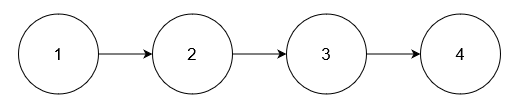
No node has value 5.
Constraints:
1 <= nums.length <= 1051 <= nums[i] <= 105- All elements in
numsare unique. - The number of nodes in the given list is in the range
[1, 105]. 1 <= Node.val <= 105- The input is generated such that there is at least one node in the linked list that has a value not present in
nums.

Solution
Clarifying Questions
When you get asked this question in a real-life environment, it will often be ambiguous (especially at FAANG). Make sure to ask these questions in that case:
- Can the values in the linked list and the array of nodes to delete contain duplicates?
- What is the expected behavior if the linked list is empty or if the array of nodes to delete is empty?
- Is the linked list singly or doubly linked?
- What is the data type of the values stored in the linked list nodes and the array of nodes to delete (e.g., integers, strings)? Are there any constraints on the range of these values?
- Should I modify the original linked list in place, or should I return a new linked list?
Brute Force Solution
Approach
Imagine you have a train of linked boxcars, and you have a list of specific boxcar numbers to remove from the train. The brute force way checks each boxcar individually to see if it is on the list of boxcars we must remove.
Here's how the algorithm would work step-by-step:
- Start with the first boxcar in the train.
- Look at your list of boxcars to remove and check if the current boxcar's number is on that list.
- If it is on the list, remove the boxcar from the train.
- If it is not on the list, keep the boxcar in the train and move to the next boxcar.
- Repeat this process for every boxcar in the train, one at a time, checking against the list each time.
- After checking every boxcar in the train, you will have the final train with only the desired boxcars remaining.
Code Implementation
def delete_nodes_from_linked_list(head, nodes_to_delete):    current_node = head
    previous_node = None

    while current_node:
        # Check if the current node's value is in the delete list
        if current_node.val in nodes_to_delete:

            # Handle the case where the node to delete is the head
            if previous_node is None:
                head = current_node.next
            else:
                previous_node.next = current_node.next

            current_node = current_node.next
        else:
            previous_node = current_node
            current_node = current_node.next

return headBig(O) Analysis
Optimal Solution
Approach
We want to remove specific nodes from a linked list, where the nodes to remove are identified by their values which are present in an array. The efficient way involves checking each node in the linked list once and removing it if its value is in the array. This avoids repeatedly searching the list or array.
Here's how the algorithm would work step-by-step:
- First, create a quick way to check if a value exists in the array of values we want to delete. Think of it like creating a set, which allows for very fast lookups.
- Start at the beginning of the linked list.
- Look at the value of the current node. Is it in our set of values to delete?
- If the current node's value is in the set, we need to remove it. Update the previous node to point to the next node, effectively skipping over the current node.
- If the current node's value is NOT in the set, move the 'previous' marker to the current node. We keep track of the 'previous' node so we can easily remove nodes when necessary.
- Move to the next node in the linked list and repeat steps 3-5 until the end of the list is reached.
- Be careful when handling the head of the linked list. If the head needs to be deleted, update the head to the next node in the list.
Code Implementation
class ListNode:
    def __init__(self, value):
        self.value = value
        self.next = None

def delete_nodes(head, values_to_delete):
    values_to_delete_set = set(values_to_delete)

    # Handle the case where the head itself needs to be deleted.
    while head and head.value in values_to_delete_set:
        head = head.next

    if not head:
        return None

    previous_node = head
    current_node = head.next

    while current_node:
        # Check if the current node's value is in the set of values to delete.
        if current_node.value in values_to_delete_set:
            # Remove the current node by updating the previous node's next pointer.
            previous_node.next = current_node.next
            current_node = current_node.next
        else:
            # Move previous node forward.
            previous_node = current_node
            current_node = current_node.next

return headBig(O) Analysis
Edge Cases
| Case | How to Handle |
|---|---|
| Empty linked list | Return null immediately as there are no nodes to delete. |
| Null linked list | Return null immediately as there is no list to operate on. |
| Empty array of values to delete | Return the original linked list as no nodes need to be deleted. |
| Null array of values to delete | Return the original linked list as no nodes need to be deleted. |
| Linked list contains duplicate values that are also in the delete array | Ensure all occurrences of these duplicate values are deleted from the linked list. |
| Delete array contains values not present in the linked list | The algorithm should safely ignore these values without errors. |
| All nodes in the linked list need to be deleted | Return null, indicating an empty linked list. |
| Head node's value is in the delete array | Update the head pointer correctly to the next valid node after deletion. |






